
 Fly with Us!
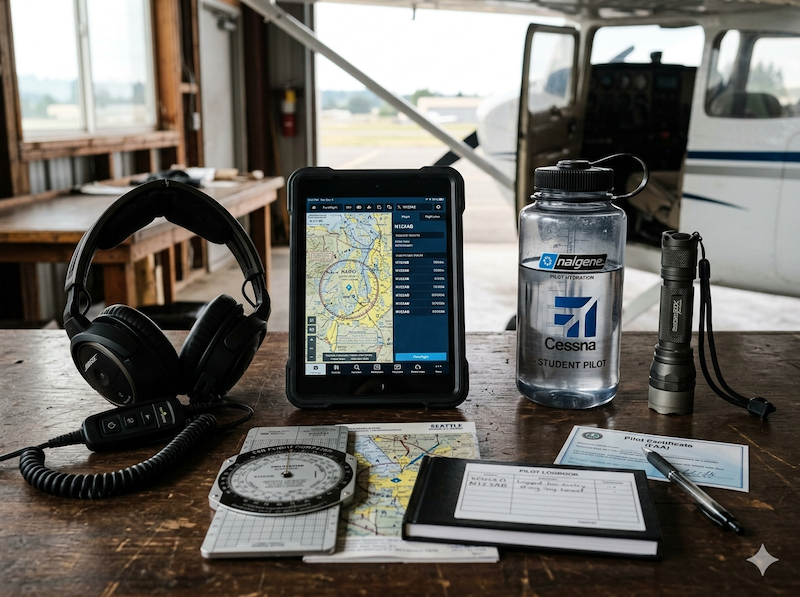 Starting your journey as a student pilot is an exhilarating experience, but it also comes with a lot of questions about what equipment you actually need. While your flight school will provide the airplane and the instructor, there are several personal items that will make your training safer, more comfortable, and more efficient.
Here is a guide to the essential gear for every new student pilot.
1. Aviation Headset
Your headset is perhaps the most critical piece of equipment you will own. It protects your hearing, allows you to communicate clearly with Air Traffic Control (ATC), and helps you hear your instructor over the roar of the engine.
Because this is such a significant investment, we have a dedicated guide to help you choose: What headset should I buy as a new student pilot?
2. A Reliable Flashlight
Even if you aren't planning on flying at night right away, a good flashlight is essential for preflighting the airplane in a dark hangar or during early morning lessons.
Look for a rugged LED flashlight that features both white and red light modes. Red light is crucial for night flying because it helps preserve your night vision while allowing you to read charts and checklists in the cockpit.
3. iPad Mini 7 (Cellular + Wi-Fi)
In modern aviation, an iPad running an Electronic Flight Bag (EFB) app like ForeFlight or Garmin Pilot is standard equipment. While any iPad can work, the iPad Mini 7 is widely considered the "Goldilocks" size for general aviation cockpits—it's large enough to read easily but small enough not to block your flight controls or instruments.
Crucial Tip: When buying an iPad for flying, ensure you get the Cellular + Wi-Fi model. You don't necessarily need an active data plan, but the cellular models include a built-in GPS chip, which is essential for showing your position on the map while in flight. Wi-Fi-only models do not have internal GPS.
4. Non-Polarized Sunglasses
A good pair of sunglasses is vital for eye protection and reducing fatigue on long, sunny flights. However, pilots have a specific requirement: your sunglasses must be non-polarized.
Polarized lenses are great for fishing, but they can create "blank spots" or "rainbowing" effects when looking at the digital screens (Glass Cockpits) found in many modern training aircraft. They can also make it difficult to see other aircraft by masking the "glint" of sun reflecting off their wings. Stick to high-quality non-polarized lenses.
5. Water Bottle
Flight training is mentally and physically taxing. Cockpits can get very hot in the summer, and the air at altitude is much drier than on the ground. Dehydration leads to fatigue and poor decision-making—two things you want to avoid in the air.
Invest in a durable, reusable water bottle (like a Yeti or Hydro Flask) and make it a habit to bring it on every flight.
6. Digital Flight Computer (E6B)
While most of your in-flight calculations will eventually be handled by your iPad or the airplane's avionics, you will still need a dedicated flight computer. Specifically, a digital E6B (like the Sporty's Electronic E6B or ASA CX-3) is highly recommended for your FAA Knowledge Test.
iPads and other personal electronic devices are strictly prohibited during the exam. While the ASA CX-3 is now built into the computer-based knowledge test software at most testing centers, many students find it much easier and faster to use a physical handheld device that they have practiced with. You can practice with an online version of the CX-3 if you prefer to use the built-in eversion.
7. Flight Bag
Finally, you’ll need a way to carry all this gear! A dedicated flight bag helps you stay organized so you aren't fumbling for a flashlight or your iPad mid-flight.
You don't need a massive suitcase; a medium-sized bag with specific compartments for your headset, iPad, and fuel tester is perfect. Brands like Flight Outfitters or Sporty's make excellent bags designed specifically for the needs of student pilots.
Conclusion
While it's tempting to buy every gadget available, starting with these essentials will set you up for success. Focus on quality items that will last throughout your training and into your career as a licensed pilot.
Happy flying!