 Fly with Us!
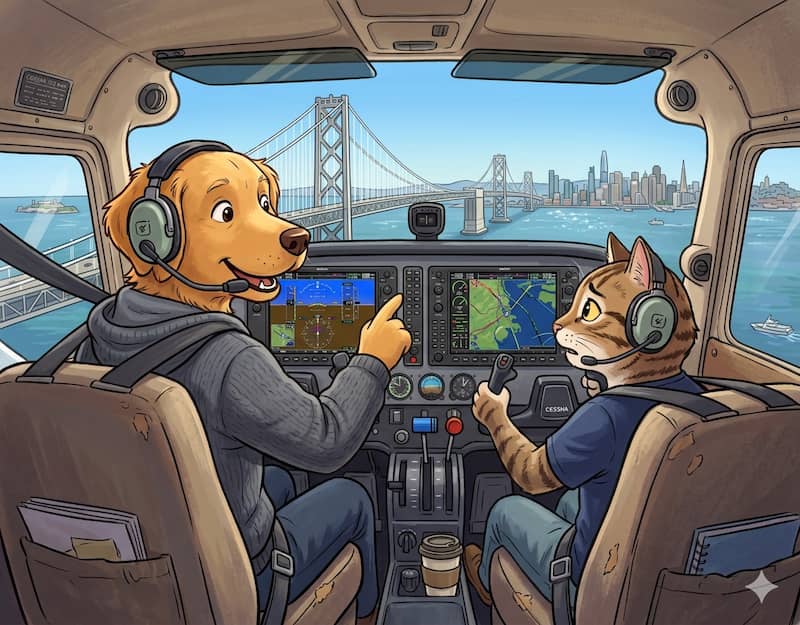 The landscape of flight training has fundamentally changed with the FAA's MOSAIC (Modernization of Special Airworthiness Certification) rules. One of the biggest shifts is that Sport Pilots are no longer restricted to light, two-seat "Light Sport Aircraft." They can now fly many of the same four-seat trainers used by Private Pilots, including the Cessna 172.
This change makes the Sport Pilot certificate a more attractive and flexible option than ever before. However, while the training aircraft might be the same, the training paths, costs, and operational limitations still differ significantly.
Can I really fly a Cessna 172 as a Sport Pilot?
Yes! Under MOSAIC, Sport Pilots can operate aircraft that meet specific performance criteria, which includes the Cessna 172 and Piper PA-28 series. This means you can train in the same aircraft regardless of which certificate you pursue, giving you more options for rental and instruction.
The Real Differences: Privileges and Limitations
If many popular training aircraft are the same, why choose one over the other? The difference lies in the operating limitations of both the pilot and the airplane.
| Feature | Sport Pilot | Private Pilot |
|---|---|---|
| Passengers | Max 1 passenger | Up to the seating capacity of the aircraft |
| Night Flying | Day VFR only (unless endorsed and a medical certificate is obtained) | Night flying included in standard training |
| Medical | Valid U.S. driver's license | FAA Third-Class Medical Certificate |
| Advanced Ratings | Limited | Can add Instrument, Multi-Engine, etc. |
| Maximum Seats | 4 seats | No maximum |
| Maximum Stall Speed | 59 knots calibrated airspeed (KCAS) (no flaps) | No maximum |
For many, the single-passenger limit is the biggest trade-off. Even if you are flying a four-seat Cessna 172, as a Sport Pilot, you can only bring one friend along.
Training Hours and Cost Breakdown
The financial advantage of the Sport Pilot path comes from the reduced training time. Because the syllabus is more focused, the FAA minimums are lower.
| Requirement | Sport Pilot | Private Pilot |
|---|---|---|
| FAA Minimum | 20 Hours | 40 Hours |
| Typical Student | 35 - 45 Hours | 50 - 80 Hours |
In the Bay Area, where combined aircraft and instructor rates often exceed $350/hour, finishing 20-30 hours sooner represents a savings of $7,000 to $11,500.
Medical Certificate
To fly as a Private Pilot, you must see an Aviation Medical Examiner (AME) for a Third-Class Medical Certificate. This costs approximately $300 and must be renewed periodically.
Sport Pilots can generally use a valid U.S. Driver's License as proof of medical fitness. This not only saves money but also removes the administrative burden and potential denial of a medical certificate.
Which Path is Right for You?
Choose Sport Pilot if:
- Cost and speed to completion are your primary concerns.
- You will fly solo or with just one passenger.
- You prefer the simplicity of using your Driver's License for medical eligibility.
Choose Private Pilot if:
- You want to fill all seats in the airplane.
- You plan to fly at night.
- You plan to pursue advanced ratings such as instrument or multi-engine.
At Stanford Flying Club, we can help you navigate either path using our modern fleet. Our instructors are experienced in both Sport and Private Pilot training curricula and can help you decide which certificate best fits your goals.