
 Fly with Us!
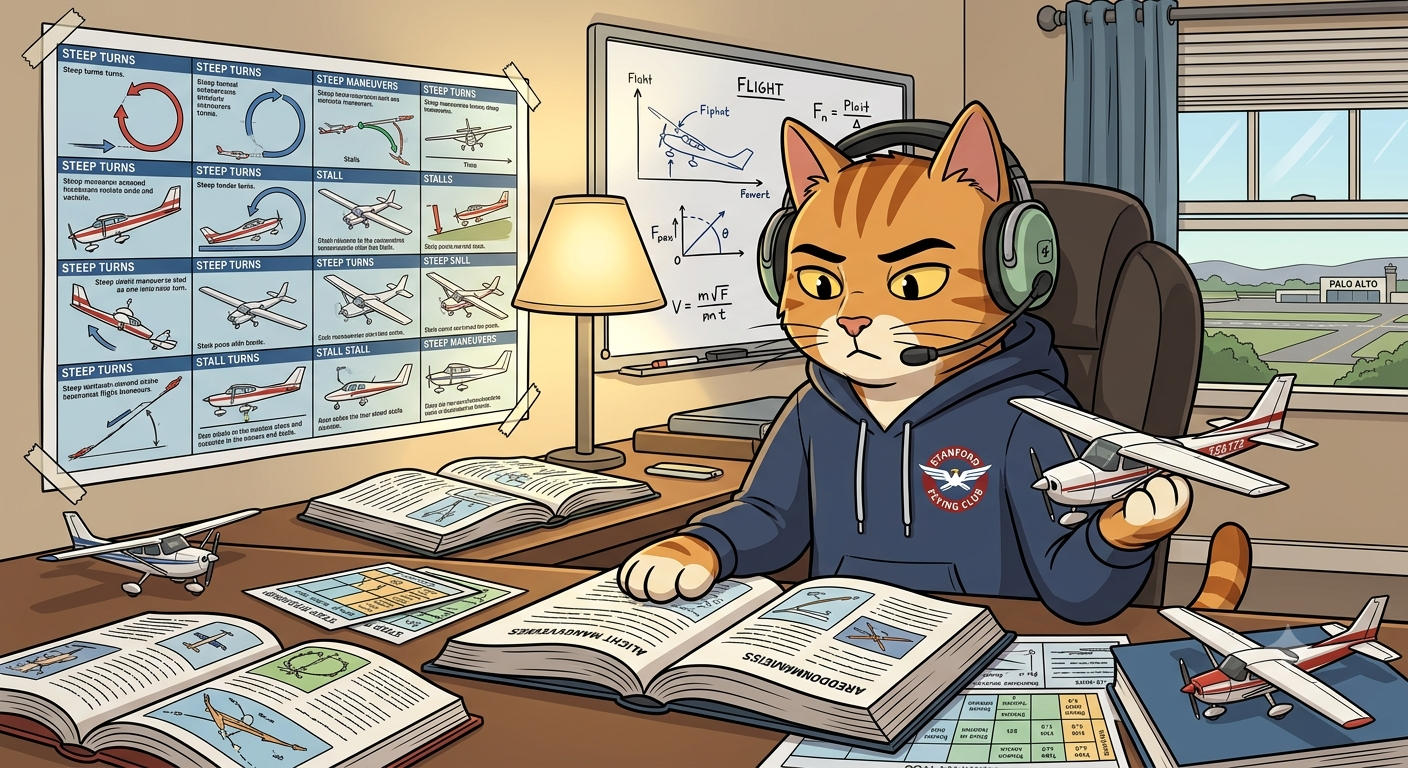 Learning to fly is one of the most rewarding journeys you can undertake, but it is also a significant financial commitment. The cost of aircraft rental, fuel, and instructor time can add up quickly. Fortunately, you have a lot of control over the final tab. Earning your license efficiently is about maximizing the value of every hour in the air and minimizing the time spent "re-learning" old lessons.
Here are our top cost-saving tips for student pilots, combining practical habits with local strategies at Stanford Flying Club.
1. Fly 2 to 3 Times per Week
One of the single biggest drivers of high training costs is rustiness. If you fly only once a week (or once every two weeks), you will spend the first 15 to 20 minutes of each lesson reviewing and regaining the muscle memory from the previous flight.
- The Math: Flying 2 to 3 times per week keeps your skills sharp and muscle memory active. You will progress linearly, complete your training in fewer overall flight hours, and save thousands of dollars.
2. Come Prepared for Every Lesson
Flight instructors charge for ground instruction just like they do for flight instruction. If you show up unprepared, you will spend expensive ground time learning concepts that you could have read about at home.
- Action Plan: Always ask your instructor what the next lesson will cover. Read the relevant chapters, review the maneuvers, and prepare a list of questions for your instructor ahead of time.
3. Use a Written Syllabus
Unstructured flight training is a major money sink. Without a clear path, lessons can drift into aimless "air work" without measurable progress.
- Our Method: Stanford Flying Club uses an integrated, structured syllabus. By following a clear, staged path, you know exactly what is expected of you on every flight. Check out our integrated flight training overview to see how a structured curriculum keeps you on track.
4. Practice ATC Communications on the Ground
Radio communications are one of the most intimidating parts of flight training, especially in the busy San Francisco Bay Area airspace. Spending flight hours practicing talking on the radio is an expensive way to learn.
- Free Resources:
- Use LiveATC.net to listen to live communications at Palo Alto Airport (KPAO) or San Jose (KRHV). It helps you learn the rhythm, terminology, and common instructions.
- Practice reading back clearances and taxi instructions out loud at home.
5. Leverage Free FAA Textbooks
You do not need to spend hundreds of dollars on commercial textbook bundles. The FAA publishes the official reference guides as free PDFs online.
- Must-Reads: Download these directly from the FAA website:
- Pilot's Handbook of Aeronautical Knowledge (PHAK): Covers aerodynamics, weather, navigation, and systems.
- Airplane Flying Handbook (AFH): Explains how to fly maneuvers, takeoffs, landings, and emergency procedures.
- Aeronautical Information Manual (AIM): The official guide to basic flight information and ATC procedures.
6. Utilize High-Quality YouTube Channels
YouTube is filled with excellent, free educational videos from certified flight instructors. Visualizing flight maneuvers and airspace concepts from multiple angles can make them click faster.
- Recommended Channels:
- The Finer Points: Excellent for practical flight tips, stick-and-rudder skills, and flight safety.
- Free Pilot Training: Offers complete ground school tutorials on aerodynamics, weather, and regulations.
- Boldmethod: Great for visual breakdowns of airspace, maneuvers, and weather patterns.
- FlightChops: Fun and educational videos showing real flight scenarios, mistakes, and lessons learned.
7. Choose a Light Sport Aircraft (LSA)
If you are pursuing a Sport Pilot or Private Pilot license, training in a smaller, lighter aircraft can cut your costs dramatically.
- The Fleet Advantage: Stanford Flying Club operates a fleet of cost-effective Light Sport Aircraft, including the Cessna 162 Skycatcher and the Vans RV-12iST.
- These 2-seat trainers rent for less than our Cessna 172s and burn significantly less fuel. Over a 45-hour training course, choosing an LSA can save you over $1,500 in rental and fuel costs.
8. "Chair Fly" (Mental Simulation)
Chair flying is a completely free, highly effective way to build muscle memory. Sit in a quiet room, close your eyes, and physically act out the flight deck controls, checklists, and radio calls for a specific maneuver.
- How to do it: Walk through an engine start, a steep turn, or an engine-out emergency procedure step-by-step.
9. Get to the Airport Early
Time spent preflighting the aircraft, pulling it out of the tie-down, and organizing your cockpit alongside your instructor is time you are paying for their presence.
- Action Plan: Arrive 30 minutes before your scheduled lesson time. Retrieve the aircraft keys and binder, complete the preflight inspection, remove sunshields and tie-downs, clean the windshield, and order fuel if needed. Having the airplane completely ready to go by the time your instructor arrives ensures that your paid time is spent flying, not preflighting.
10. Partner Up with Another Student Pilot
Flight training can sometimes feel like a solo endeavor, but studying with a peer is one of the most effective ways to save money.
- How it saves money: You can quiz each other on oral exam questions. Explaining complex aeronautical concepts (like weather systems or airspace rules) to a study partner is one of the best ways to solidify your own understanding without paying for instructor ground time.